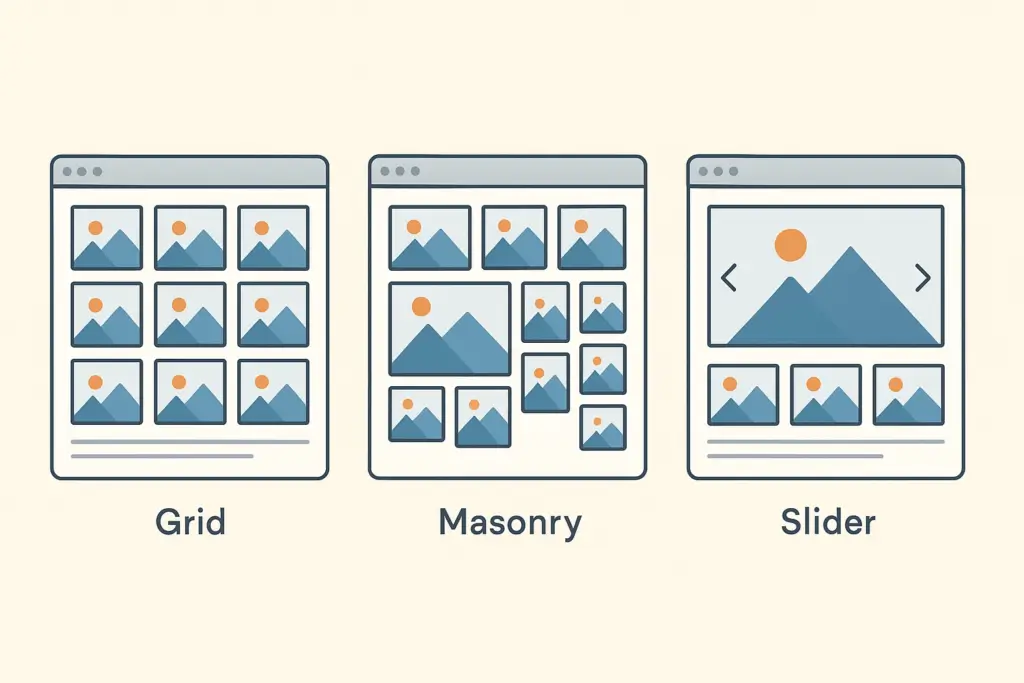
Why Interactivity Wins
Static galleries are a solid foundation, but interactive galleries invite action. When users can spin, swipe, or filter, they’re no longer passive viewers—they’re active participants. That interaction keeps them engaged longer and builds confidence in their choices.
Types of Interactive Galleries
- 360° Product Spins Customers can rotate an item and inspect every angle.
- Before/After Sliders Perfect for fitness transformations, home renovations, or restoration projects.
- Filterable Grids Let people sort by size, color, category, or dietary needs.
- Linked Tiles Turn gallery visuals into clickable pathways to product pages, booking forms, or service details.
Who Benefits Most
- E-commerce brands increase conversion by letting customers explore details.
- Fitness & health before/after proof builds instant trust.
- Fashion & retail swatches and variations make decisions easier.
- Architecture & design interactive walkthroughs and project progress views.
- Hospitality & tourism galleries tied to booking actions.
How AI Enhances Interactive Galleries
AI can be a secret weapon behind the scenes:
- Generate missing product variations (e.g., a shoe color not yet photographed).
- Clean and unify angles for smoother 360° spins.
- Replace inconsistent backgrounds across an interactive set.
- Mock up demo visuals for testing plugins before investing in production.
This means you can launch faster, test layouts early, and keep visuals polished across every interaction.
Final Thought
Interactivity turns “look at this” into “click, compare, and decide.” By going beyond static galleries, you give customers confidence, create a smoother buying journey, and build a stronger connection with your brand.
70% of business sites have critical SEO issues.
Starting at $24.99 Monthly or One time Scan
A quick checkup that shows what’s working, what’s failing, and where small fixes can create big wins. (Learn More)